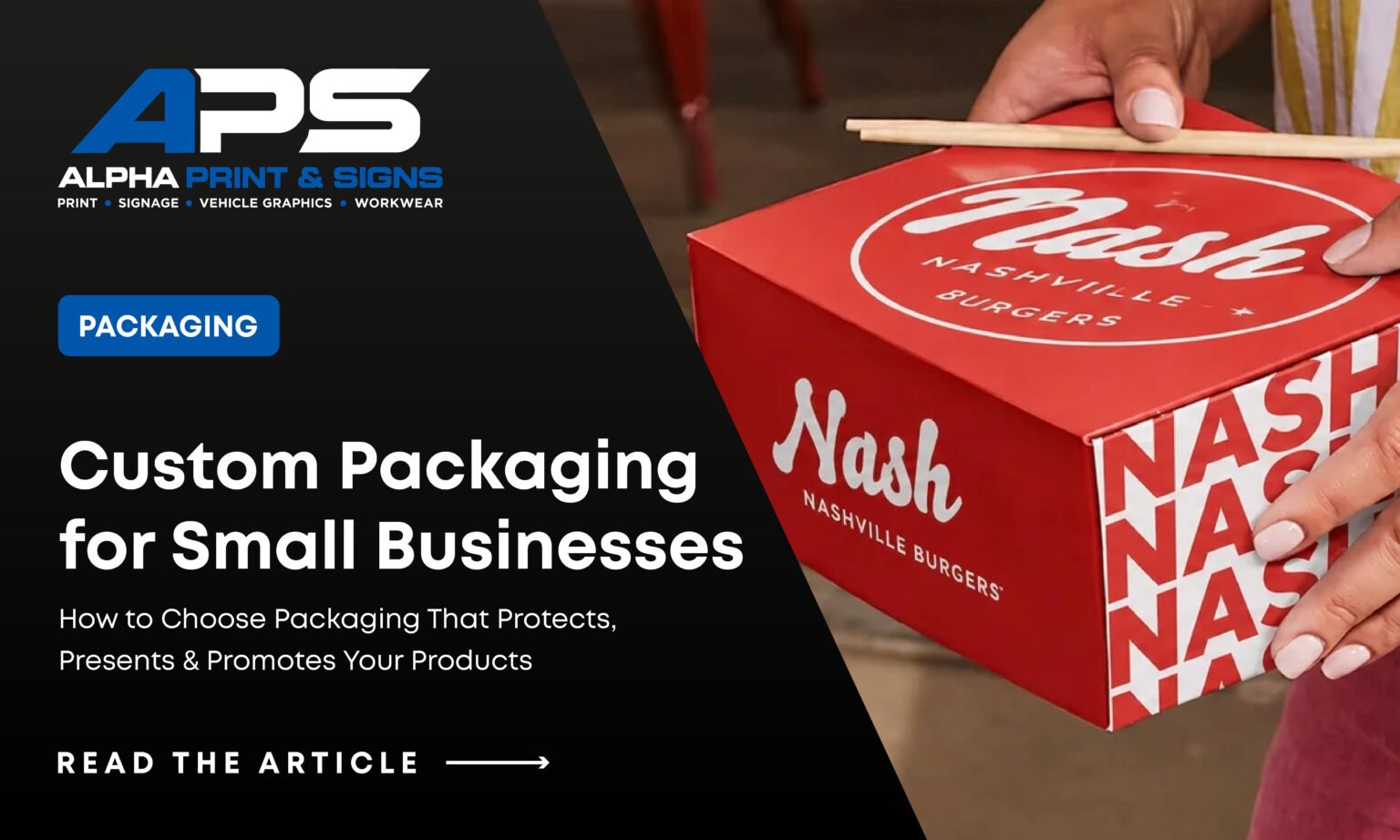
Custom Packaging for Small Business UK: A Guide to Choosing the Right Packaging
Choosing custom packaging for small business UK products can feel more complicated than it first appears.
You need packaging that protects the product, represents your brand and works within a sensible budget — without ordering something unnecessarily complicated or expensive.
For an ecommerce business, the packaging may be the first physical interaction a customer has with the brand. For a retail product, it may be sitting on a shelf beside several competitors.
The right packaging therefore has more than one job.
It needs to protect, present and promote the product.
Here’s what UK small businesses should consider before ordering custom printed packaging.
[INTERNAL LINK → Packaging category | Anchor text: custom printed packaging]
1. Start With What the Packaging Actually Needs to Do
Before deciding on colours, finishes or logos, start with the product itself.
Ask:
- What are you packaging?
- How large and heavy is it?
- Is it fragile?
- Will it be posted?
- Will it sit on a retail shelf?
- Does the customer need to open and close it repeatedly?
- Does it need additional protection inside?
- How many units do you expect to use?
A lightweight cosmetic item has completely different requirements from a heavy automotive component.
Likewise, an ecommerce box travelling through a courier network needs to perform differently from packaging handed directly to a customer in a shop.
Getting the structure right first prevents you from paying for beautiful packaging that isn’t practical.
2. Decide How Much Customisation You Really Need
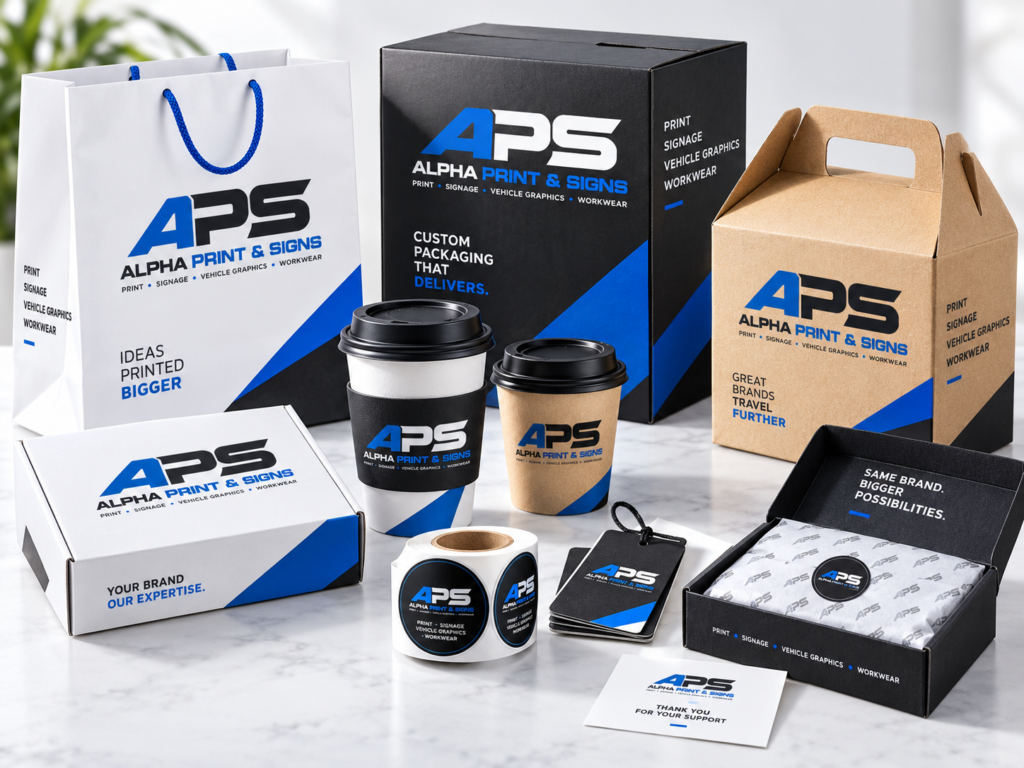
Custom packaging does not necessarily mean every surface needs to be printed.
There are several ways to introduce branding.
Fully printed packaging
The packaging itself carries your colours, logo, messaging and graphics.
This creates the greatest control over the appearance and can work particularly well for products where presentation is a major part of the buying experience.
Branded labels
A professionally printed label can transform otherwise relatively simple packaging.
This can be useful for businesses that:
- Sell several products
- Change flavours or varieties regularly
- Need different product information
- Are testing a new product
- Don’t yet require large quantities of fully bespoke packaging
Printed sleeves
A sleeve can wrap around a plain box, tray or product and carry most of the visual branding.
That can create a highly customised appearance while allowing the underlying packaging format to remain consistent across several products.
Printed inserts
An insert inside an ecommerce order can carry:
- Thank-you messages
- Care instructions
- Discount codes
- QR codes
- Review requests
- Cross-sell offers
Sometimes the smartest small business packaging uses several simple elements rather than one extremely complicated box.
[IMAGE PROMPT]
Visual Concept: Premium flat-lay showing four ways to brand the same fictional product: plain packaging with branded label, printed sleeve, fully printed box and simple box with branded insert card. Keep the product identical in every example so the branding options are easy to compare.
SEO Alt Text: Custom packaging for small business UK showing boxes labels sleeves and inserts
3. Choose the Right Packaging Material
There isn’t one packaging material that works for every business.
The correct choice depends on weight, protection, print requirements and how the customer will use the packaging.
Card and paperboard
Paperboard works well for many retail products where presentation and print quality are important.
It can be used for applications such as cartons, sleeves and lightweight product packaging.
Corrugated board
Corrugated material provides additional structure and protection.
It’s commonly associated with ecommerce and shipping applications where the packaging needs to withstand handling during delivery.
Labels and films
Not every product needs a custom box.
Printed labels can provide product branding, instructions and other information while allowing businesses to use an existing container, bottle or package.
The important point is to avoid choosing a material purely because you’ve seen another company using it.
Your packaging should be designed around your own product and distribution method.
4. Get the Size Right
Oversized packaging doesn’t automatically feel more premium.
Often, it simply means:
- More material
- More empty space
- Larger shipping dimensions
- More void fill
- More storage space
On the other hand, packaging that is too tight could damage the product or make it difficult to pack efficiently.
A good packaging specification aims to create enough protection without using unnecessary volume.
Send accurate product dimensions
When requesting a packaging quote, have the product’s:
Length × Width × Height
along with its approximate weight.
If several products need to fit inside the same pack, explain how they will be arranged.
Physical samples can also be useful for more complicated packaging projects.
5. Design Packaging for the Customer Experience
Good branded packaging UK businesses use doesn’t need to be covered in logos.
A more considered design might use:
Outside: Simple branding and logo
Inside: Short thank-you message
Insert: Care instructions or offer
QR code: Link to reorder, register or leave a review
This turns the package into another marketing touchpoint.
For an online business in particular, the customer has already purchased by the time they see the packaging.
That makes it a useful opportunity to encourage:
- Repeat purchases
- Reviews
- Referrals
- Social media interaction
- Product registration
- Related purchases
The goal isn’t simply to make the box attractive.
It’s to make the packaging part of the overall customer experience.
[INTERNAL LINK → Print & Digital Marketing article | Anchor text: connecting printed materials with digital marketing]
[IMAGE PROMPT]
Visual Concept: Realistic unboxing scene featuring a professionally printed ecommerce box being opened. Inside include neatly packed product, branded tissue or insert card and a visible QR code with a simple “Thank You – Scan to Shop Again” message. Keep the design premium and suitable for a real UK small business.
SEO Alt Text: Branded packaging UK ecommerce unboxing with printed insert and QR code
6. Think Carefully About Quantity
One of the biggest questions when buying custom packaging for small business UK is how many units to order.
Higher quantities can often improve the unit economics of printed packaging because setup and production costs are spread across more units.
But that does not mean ordering the largest quantity possible is automatically sensible.
Ask:
- How quickly will you use the packaging?
- Is your branding likely to change?
- Could product information change?
- Do you have somewhere suitable to store it?
- Are you testing a new product?
- Is the product seasonal?
Ordering 10,000 boxes isn’t economical if you redesign the product after selling 1,000.
For newer products, it can sometimes make more sense to start with a simpler branded packaging approach before committing to a much larger run.
When requesting a quote, ask about minimum order quantities and quantity price breaks for the particular packaging format you’re considering.
7. Don’t Ignore Sustainability and Packaging Regulations
Businesses increasingly want packaging to use material efficiently and be easier for customers to deal with after use.
A sensible starting point is simply to avoid unnecessary packaging.
That could mean:
- Right-sizing boxes
- Reducing unnecessary layers
- Using one material where suitable
- Avoiding oversized shipping cartons
- Designing packaging that’s easier to separate
- Making recycling information clear where appropriate
UK packaging rules are also changing.
Extended Producer Responsibility (EPR) for packaging can place registration and reporting obligations on businesses that supply or import packaging or packaged goods when the applicable thresholds and conditions are met. Current government guidance states that obligations can apply to businesses involved in activities including supplying own-brand packaged goods, placing goods into packaging, importing packaged products and selling empty packaging.
For 2026 reporting, government guidance states that an organisation may become an obligated producer where it is established in the UK, supplied or imported more than 25 tonnes of packaging in the previous year, and had worldwide annual turnover of at least £1 million. The precise duties then depend on whether the organisation is classed as a small or large producer.
[EXTERNAL DOFOLLOW LINK → GOV.UK | Anchor text: UK Extended Producer Responsibility for packaging guidance]
This isn’t something most microbusinesses need to panic about when ordering their first few hundred boxes, but growing brands should understand whether packaging regulations apply to them rather than treating packaging purely as a design decision.
What Should You Put on Custom Packaging?
This depends on the product, but common branding elements include:
- Company logo
- Product name
- Brand colours
- Website
- Social media
- QR code
- Instructions
- Contact details
- Product information
- Disposal or recycling information where relevant
Keep promotional information separate from any legally required product labelling relevant to your particular product.
Food, cosmetics and other regulated goods can have additional labelling requirements, so the artwork should be checked against the rules applying to the product before printing.
Common Custom Packaging Mistakes
Making the packaging too complicated
More colours, panels and finishes don’t automatically create a better brand.
Strong packaging can be extremely simple.
Designing before choosing the packaging structure
Create the physical format first and design artwork around the final dieline or template.
Using images taken from a website
Packaging requires suitable high-resolution artwork. Small online images can look poor when printed.
Ordering too much too soon
Think carefully about whether your branding, product information or range could change.
Forgetting the unboxing experience
Consider what the customer sees immediately after opening the package.
[IMAGE PROMPT]
Visual Concept: Three-stage packaging development graphic: first panel shows the physical product with measurements, second shows a packaging dieline and branding artwork, third shows the finished professionally printed package. Use one consistent fictional product across all stages.
SEO Alt Text: Custom printed packaging design process from product dimensions to finished box
What Do We Need to Quote Custom Packaging?
If you’re considering custom packaging for small business UK, you don’t need to arrive with a complete technical specification.
A useful starting point is:
- What the product is
- Product dimensions
- Approximate weight
- Packaging style you have in mind
- Quantity required
- Your logo or artwork
- Examples of packaging you like
- How the product will be sold or delivered
From there, the packaging specification can be developed around the actual requirement.
Custom Packaging From Alpha Print & Signs
Packaging should do more than contain a product.
It should protect what you’ve sold, present your business professionally and help create a consistent brand experience from the moment the package reaches the customer.
At Alpha Print & Signs, we can work with businesses looking for professionally printed and branded packaging solutions.
Whether you’re launching a new product, improving existing packaging or trying to create a more professional customer experience, send us the product details, quantities and branding you have in mind.
We can then discuss the most appropriate approach for your requirement.
[PRIMARY CTA BUTTON: GET A PACKAGING QUOTE]
[SECONDARY CTA BUTTON: VIEW PACKAGING OPTIONS]
[INTERNAL LINK → Packaging category | Anchor text: custom packaging]
[INTERNAL LINK → Contact page | Anchor text: request a packaging quote]
Frequently Asked Questions
Is custom packaging worth it for a small business?
It can be, particularly when presentation influences the customer’s experience or the packaging is visible before purchase. Custom packaging can also provide space for instructions, QR codes, repeat-purchase offers and other brand messaging.
Do I need fully printed boxes?
Not necessarily. Custom printed packaging can also involve labels, sleeves, inserts or other branded elements. A simpler solution may be more appropriate for smaller quantities or products that change frequently.
How many custom boxes do I need to order?
Minimum quantities depend on the packaging type and production method. Consider how quickly you’ll use the packaging and whether your branding or product information could change before committing to a large run.
What information do I need for a packaging quote?
Product dimensions, weight, required quantity, intended packaging style and branding are a good starting point. Photographs or physical product samples can also help for more complex requirements.
Does my business need to comply with UK packaging EPR rules?
It depends on your business activities, turnover and the amount of packaging you supply or import. Current government guidance sets specific thresholds and different requirements for small and large obligated producers.