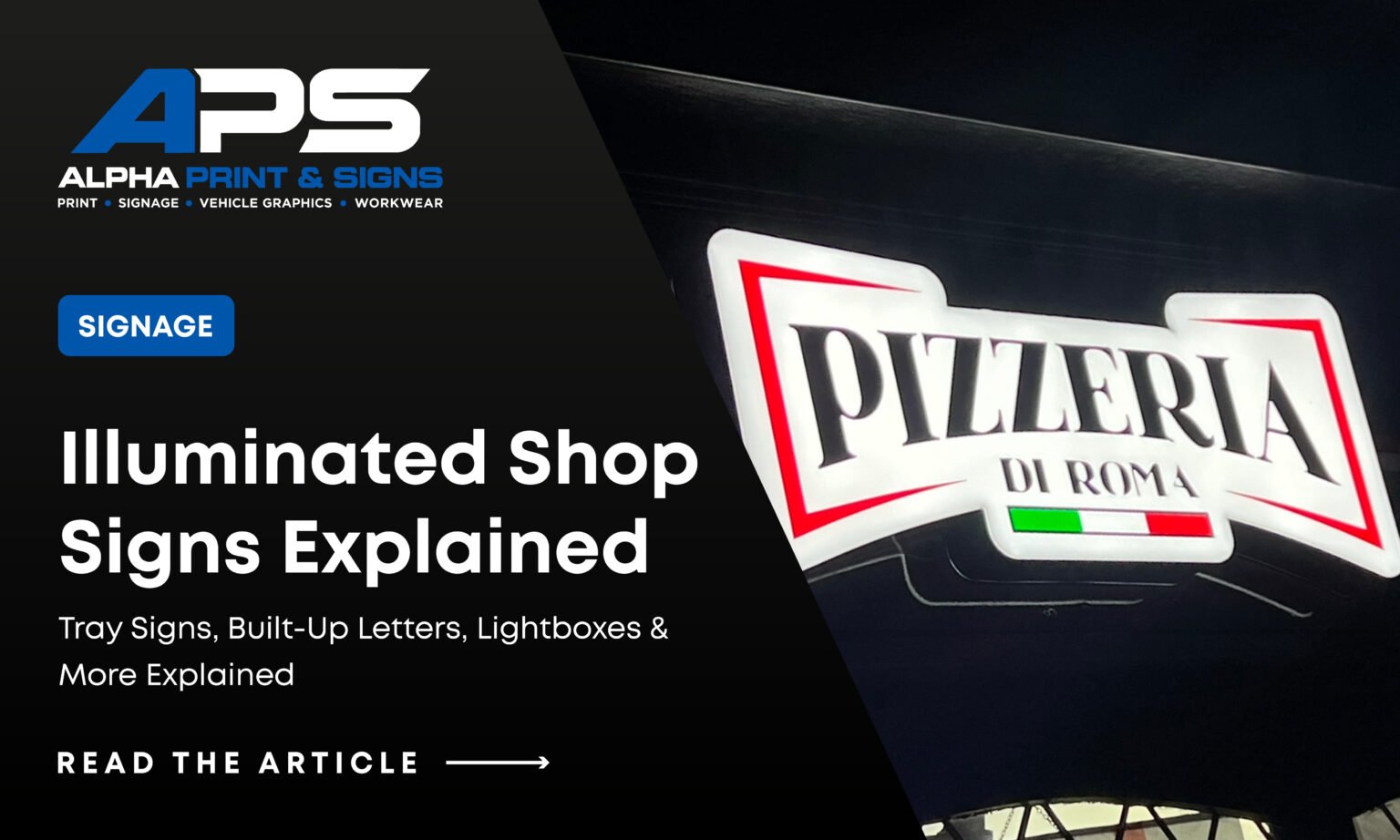
Illuminated Shop Signs Explained: Tray Signs, Built-Up Letters, Lightboxes and More
Illuminated shop signs can completely change how a business looks after dark, but choosing the right type isn’t always straightforward.
A sign tray with illuminated lettering, individually built-up letters and a traditional lightbox can all create very different results — and they also differ in construction, appearance and cost.
For most businesses, the best option depends on the building, brand, viewing distance, opening hours and available budget.
Here are the main types of illuminated shop signage and where each works best.
[INTERNAL LINK → Shop Signage | Anchor text: professional shop signage]
What Are the Main Types of Illuminated Shop Signs?
There isn’t one standard illuminated sign.
The main options you’ll commonly see on UK shopfronts include:
| Sign type | Appearance | Best suited to |
|---|---|---|
| Illuminated sign tray | Clean, modern fascia | Retail, offices, salons, restaurants |
| Built-up face-lit letters | Bright individual letters | High streets, retail, hospitality |
| Halo-lit letters | Softer glow behind letters | Premium brands, salons, restaurants |
| Lightbox | Entire sign face illuminates | Takeaways, convenience retail |
| External trough lighting | Light shines onto fascia | Traditional or non-illuminated fascias |
The right choice comes down to the visual effect you’re trying to achieve.
1. Illuminated Sign Trays
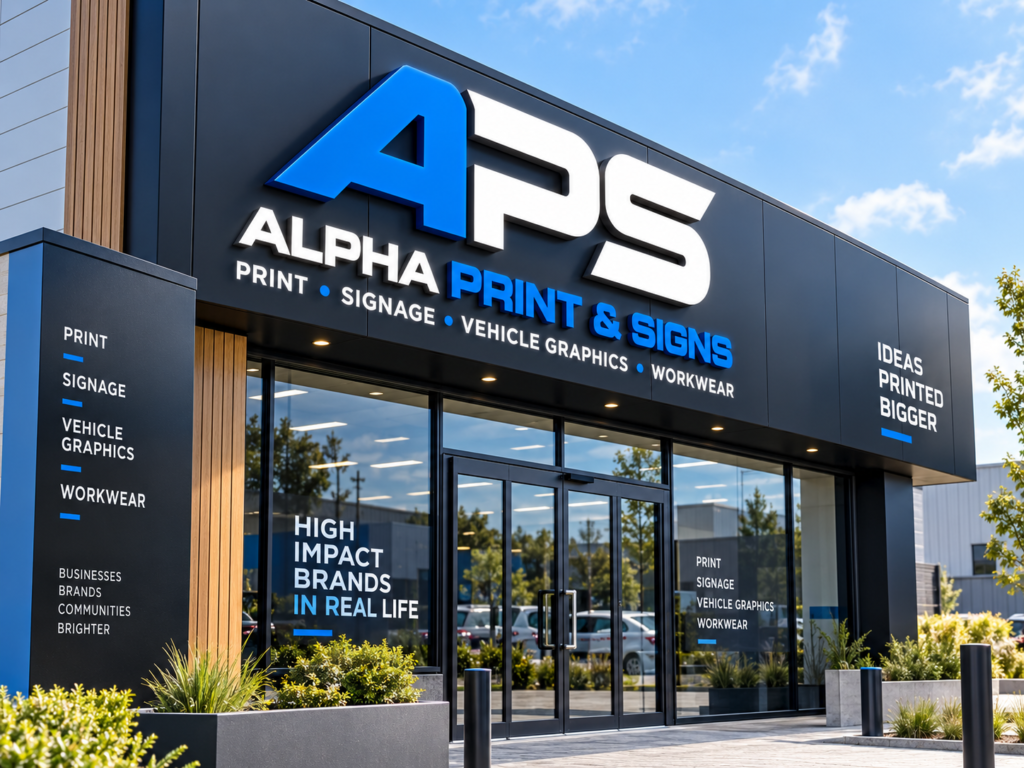
A sign tray is usually manufactured from folded aluminium to create a clean, rigid fascia.
The tray itself doesn’t necessarily illuminate. Instead, lettering or a logo can be mounted onto it and illuminated in different ways.
For example, a dark aluminium tray could have:
- Flat-cut acrylic lettering
- Built-up illuminated letters
- Halo-lit lettering
- An illuminated logo
- A combination of lit and non-lit elements
This makes sign trays one of the most versatile options for modern shopfronts.
Why choose a sign tray?
They work particularly well when you want:
- A clean contemporary appearance
- A fascia colour that matches your branding
- Concealed fixings
- Individual lettering
- A more architectural finish than a flat printed board
An aluminium tray can also cover an older fascia and create a completely new visual surface.
[INTERNAL LINK → Shop Fascia Signs | Anchor text: shop fascia signs]
2. Built-Up Illuminated Letters
Built-up letters are individual three-dimensional characters manufactured with depth rather than simply being cut from flat material.
They can produce some of the most premium-looking illuminated shop signs.
Two common lighting styles are particularly worth understanding.
Face-illuminated letters
The front surface of the letter lights up.
This produces a bold, highly visible result and works particularly well where the business needs to be easily recognised from further away.
Halo-illuminated letters
LED light shines backwards onto the fascia or wall behind the letter.
This creates a softer glow around the outside of each character.
Halo lighting can give signage a more understated architectural appearance, making it popular with:
- Restaurants
- Bars
- Salons
- Hotels
- Premium retailers
- Professional businesses
Some signs can also combine lighting methods depending on the required effect.
[IMAGE PROMPT]
Visual Concept: Side-by-side night comparison of two premium UK shopfronts. The first uses bright face-illuminated built-up letters on a dark aluminium sign tray. The second uses halo-illuminated letters producing a soft glow against the fascia. Keep the branding realistic and professional.
SEO Alt Text: Illuminated shop signs comparing face-lit and halo-lit built-up letters
3. Illuminated Lightboxes
A shop sign lightbox is a cabinet containing internal illumination behind a translucent sign face.
Rather than lighting only individual letters, a much larger part of the sign itself illuminates.
This can create excellent visibility.
Lightboxes are commonly seen on:
- Takeaways
- Convenience stores
- Restaurants
- Retail shops
- Shopping centres
- Commercial premises
Modern systems normally use LED illumination.
Lightbox or built-up letters?
Neither is automatically better.
A lightbox tends to create a larger illuminated area, while built-up lettering produces a more individual, architectural appearance.
For a takeaway on a busy road, the strong visibility of a lightbox might be ideal.
For a premium clothing store or salon, individually illuminated letters on a fabricated tray might better suit the brand.
This is why the design should start with the business and building, rather than simply choosing the brightest option.
4. External Illumination and Trough Lighting
Not every illuminated fascia needs lights inside the sign.
Another option is to manufacture a non-illuminated fascia and light it externally.
A trough light is normally positioned above the sign and directs light down across the fascia.
This can work particularly well with:
- Traditional shop signs
- Painted fascias
- Flat lettering
- Certain heritage-style shopfronts
- Businesses wanting the whole fascia visible after dark
It creates a very different appearance from internal LED lighting.
For some shopfronts, this simpler approach can also make more visual sense than individually illuminated letters.
5. Illuminated Projecting Signs
A projecting sign sits perpendicular to the shopfront rather than facing only towards the road.
This can help businesses attract pedestrians approaching from either direction along a high street.
Projecting signs can be:
- Internally illuminated
- Externally illuminated
- Non-illuminated
- Manufactured as trays or lightbox-style systems
Used together, an illuminated fascia and projecting sign can make a shop much easier to identify from several viewing angles.
[INTERNAL LINK → Projecting Signs | Anchor text: projecting shop signs]
[IMAGE PROMPT]
Visual Concept: Professional dusk photograph of a complete UK shopfront showing both an illuminated fascia sign and illuminated projecting sign. Include pedestrians further down the high street to demonstrate why projecting signs improve sideways visibility.
SEO Alt Text: Illuminated shop signage with fascia and projecting shop sign
Do Illuminated Shop Signs Need Planning Permission?
This is an important consideration before ordering.
In England, advertisements and business signs fall under the advertisement consent system. Planning Portal notes that many traditional non-illuminated fascia and hanging signs may have deemed consent, provided the relevant conditions are met. Signs that don’t qualify can require express advertisement consent.
Illumination can make consent more likely to be required. Planning Portal advises that advertisement consent may be needed for signs larger than 0.3m² — or any size where illuminated — although the full rules and exemptions need to be checked for the individual premises.
Listed buildings, conservation areas and local planning policies can introduce further considerations. Planning Portal also states that listed buildings may require Listed Building Consent.
Recommended external DoFollow resource:
Planning Portal – Shop Advert and Fascia Sign Guidance
It’s best to establish the requirements for the individual property before manufacturing begins.
Which Illuminated Shop Sign Is Best for Your Business?
A useful starting point is to think about the result you want.
Choose an illuminated sign tray if:
You want a clean modern fascia with plenty of flexibility over colours, lettering and illumination.
Choose face-lit built-up letters if:
You want strong visibility and individually illuminated branding.
Choose halo-lit letters if:
You want something more architectural, premium and understated.
Choose a lightbox if:
Visibility and a large illuminated surface are priorities.
Choose trough lighting if:
You already have, or want, a more traditional fascia that simply needs to remain visible after dark.
There is also no reason every element has to use the same construction.
A shopfront could combine a fabricated tray, illuminated logo, halo-lit business name and separate projecting sign.
How Much Do Illuminated Shop Signs Cost?
There isn’t a meaningful single price because two signs of the same width can have completely different specifications.
Cost is influenced by:
- Overall fascia size
- Sign construction
- Number and size of letters
- Face-lit or halo illumination
- Logo complexity
- Number of LED components
- Access requirements
- Electrical work
- Installation height
- Removal of existing signage
A relatively straightforward illuminated lightbox can therefore cost very differently from a large aluminium tray containing fifteen individually fabricated letters.
For detailed pricing information, link readers to your dedicated guide:
[INTERNAL LINK → Shop Signage Cost UK article | Anchor text: how much shop signage costs in the UK]
That keeps this article focused on choosing the right illuminated signage, while the pricing article handles the cost question in detail.
What Makes Good Illuminated Shop Signage?
The best illuminated sign isn’t necessarily the brightest one.
A good design should make the business name easy to read while complementing the architecture around it.
Consider:
- Viewing distance – can customers read it from where they approach?
- Contrast – do the letters stand out clearly from the fascia?
- Brightness – does it remain comfortable to view after dark?
- Brand consistency – do colours and typography match the business?
- Letter size – is the wording readable without overwhelming the shopfront?
- Daytime appearance – does it still look professional when switched off?
Remember that your sign will normally be seen for many more hours in daylight than darkness.
It needs to look good in both.
[IMAGE PROMPT]
Visual Concept: Four-panel infographic labelled “Sign Tray”, “Face Lit”, “Halo Lit” and “Lightbox”. Use realistic close-up illustrations of each construction so business owners can immediately understand the visual differences. Use Alpha Print & Signs blue, black and white branding around the graphic.
SEO Alt Text: Types of illuminated shop signs including trays built-up letters and lightboxes
Get Illuminated Shop Signs From Alpha Print & Signs
The best illuminated shop signs are designed around the actual building rather than selected from a catalogue without context.
At Alpha Print & Signs, we can help businesses create shopfront signage using options including sign trays, dimensional lettering, illumination and projecting signs.
If you’re opening a new premises or replacing an existing fascia, send us:
- A photograph of the shopfront
- Approximate dimensions
- Your logo or branding
- The business location
- Examples of styles you like
From there, we can discuss which signage construction is appropriate for the building, brand and budget.
[PRIMARY CTA BUTTON: GET A SHOP SIGNAGE QUOTE]
[SECONDARY CTA BUTTON: VIEW SHOP SIGNAGE]
[INTERNAL LINK → Contact / Quote Page | Anchor text: request an illuminated shop sign quote]
Frequently Asked Questions
What is the best type of illuminated shop sign?
There isn’t one best option. Built-up illuminated letters suit businesses wanting a premium individual-letter appearance, while lightboxes provide a larger illuminated surface. Sign trays offer substantial flexibility because they can incorporate several lettering and lighting styles.
What is the difference between face-lit and halo-lit letters?
Face-lit letters illuminate through the front of the character. Halo-lit letters direct light backwards, creating a glow on the surface behind them.
Are LED shop signs suitable for businesses open during the day?
Yes. Good LED shop signs should be designed to look professional when the illumination is switched both on and off.
Do illuminated shop signs need advertisement consent?
They can. Requirements depend on the sign, building and location, and illuminated signage can require advertisement consent. Check the specific premises with the relevant local planning authority before installation.
Can my existing shop fascia be illuminated?
Potentially. The existing fascia, electrical supply, construction and condition would need to be assessed before deciding whether it can be adapted or whether a replacement signage system would give a better result.